

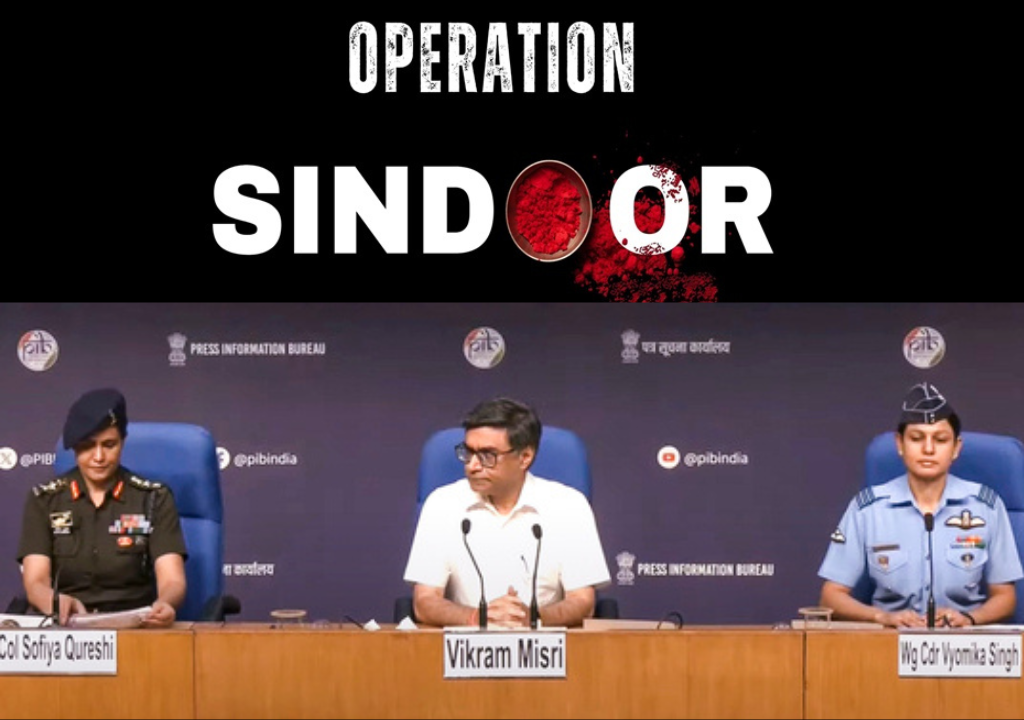
In a swift and resolute response to the Pahalgam terror attack, the Indian armed forces launched Operation Sindoor, executing 24 precision missile strikes on nine high-value terror targets across Pakistan and Pakistan-Occupied Kashmir (POK). The strikes, which occurred at 1:44 AM IST on Wednesday, specifically targeted infrastructure linked to Lashkar-e-Taiba in Muridke and Jaish-e-Mohammed in Bahawalpur—both known hubs of terror planning and coordination.
According to an official statement by the Ministry of Defence, the targeted locations were carefully selected to minimize collateral damage and avoid escalation, with no Pakistani military installations struck. The surgical nature of the mission highlights India’s strategic restraint while conveying a powerful message: those who orchestrate terror attacks on Indian soil will face decisive consequences.
This action comes days after 26 people were killed—including 25 Indian citizens and one Nepali tourist—in a brutal attack in Pahalgam, Jammu & Kashmir, on April 22. The Indian government has vowed to hold all those involved accountable, launching a counteroffensive that could reshape regional security dynamics.
What Is Operation Sindoor?
Operation Sindoor is a codename for India’s latest precision military response to cross-border terrorism. The operation marks:
- 24 missile strikes in one night
- 9 terror facilities neutralized
- Over 70 terrorists eliminated, including key operatives
- More than 60 injured, severely disrupting logistics and planning
The operation was named “Sindoor” to symbolize sacrifice, justice, and retaliation, resonating with India’s cultural and emotional resolve.
Operation Sindoor: Inside the 9 Terror Camps Targeted by Indian Missiles
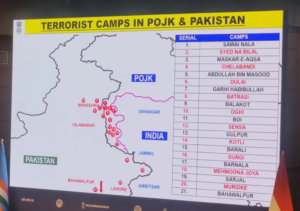
As part of Operation Sindoor, the Indian armed forces conducted 24 precision missile strikes on nine high-value terror camps located in Pakistan and Pakistan-Occupied Kashmir (POK). These camps served as the operational backbone for Lashkar-e-Taiba (LeT) and Jaish-e-Mohammed (JeM), two of the most notorious terror outfits responsible for numerous attacks on Indian soil.
Below is a breakdown of the nine terror camps hit during the operation:
1. Sawai Nala Camp – Muzaffarabad, POK
- Location: 30 km inside Pakistan-administered Muzaffarabad
- Group: Lashkar-e-Taiba
- Function: Major training facility for LeT
- Role in Terror: The Sonmarg (Oct 20, 2024), Gulmarg (Oct 24, 2024), and Pahalgam (Apr 22, 2025) attacks were traced back to modules trained here.
- Significance: Served as the launchpad for recent terror waves in Kashmir Valley.
2. Syedna Bilal Camp – POK
- Group: Jaish-e-Mohammed
- Purpose: Staging area for JeM terrorists
- Training Provided: Weapons, explosives, jungle warfare, and survival tactics
- Operational Focus: Preparing terrorists for LoC infiltration and Kashmir attacks
3. Gulpur Camp – Kotli, POK
- Distance from LoC: 30 km
- Group: Lashkar-e-Taiba
- Impact: Terrorists trained here were responsible for:
- April 20, 2023 Poonch attacks
- June 9, 2024 bus attack on pilgrims
- Notable Figure: Zaki-ur-Rehman Lakhvi, 26/11 Mumbai attacks mastermind, regularly visited this camp for indoctrination and speeches.
4. Barnala Camp – Bhimber, POK
- Distance from LoC: 9 km
- Activities:
- Firearms training
- Improvised Explosive Device (IED) fabrication
- Jungle and survival techniques
- Groups Involved: Multi-group collaboration under LeT leadership
5. Kotli Abbas Camp – POK
- Distance from LoC: 13 km
- Training Capacity: 15 operatives per batch
- Activities: Indoctrination and small unit training for LoC infiltration teams
6. Sarjal Camp – Sialkot, Pakistan
- Distance from International Border: 6 km
- Incident Link: Terrorists involved in the March 2025 killing of four Indian soldiers in J&K were trained here.
- Tactical Focus: Urban attack planning and quick-response operations
7. Mehmoona Joya Camp – Sialkot, Pakistan
- Group: Hizbul Mujahideen
- Role: A historic base for training and command
- Notable Operation: Pathankot Airbase attack was directed from this location.
- Strategic Use: Targeting military infrastructure and cross-border planning
8. Markaz Taiba – Muridke, Punjab, Pakistan
- Group: Lashkar-e-Taiba
- Function: Central recruitment and training facility
- Global Infamy:
- Trained Ajmal Kasab, 26/11 Mumbai attacker
- Used by David Headley for surveillance and planning
- Significance: Long considered the ideological and logistical HQ of LeT
9. Markaz Subhan Allah – Bahawalpur, Pakistan
- Group: Jaish-e-Mohammed
- Purpose:
- Indoctrination center
- Recruitment and radicalization hub
- Advanced training for suicide squads
- Status: Believed to be JeM’s de facto headquarters in Pakistan
Strategic Message Behind Targeting These Camps
Each of these nine camps had a direct operational link to past and recent terror incidents in India. The strikes:
- Disrupted training pipelines and terror logistics
- Sent a strong deterrent message to handlers across the border
- Were planned to disable leadership centers, including those visited by high-profile extremists
- Targeted indoctrination hubs, explosive depots, and planning nodes
“This was a message to those who miscalculate India’s resolve. These terror factories are now rubble,” a senior defence official stated.
Government and Defence Ministry Response
Following the strikes, the Ministry of Defence issued a detailed statement highlighting the three-fold intent of Operation Sindoor:
- Focused retaliation without regional destabilization
- Precision targeting of non-state actors, not national forces
- Strategic communication signaling India’s readiness without escalating into full-scale conflict
“Our actions have been focused, measured, and non-escalatory. No Pakistani military facilities were targeted,” the statement clarified.
The government emphasized that these strikes were not an act of war, but a calibrated counterterror response—underscoring India’s position as a responsible regional power.
PM Modi: “Justice Will Be Delivered Beyond Imagination”
In a fiery address shortly after the Pahalgam massacre, Prime Minister Narendra Modi promised retribution, saying:
“We will pursue those behind this heinous act to the ends of the earth and punish them beyond their imagination.”
Operation Sindoor represents the execution of that vow, showcasing India’s enhanced military readiness and strategic depth in responding to cross-border terror threats.
Modi’s remarks also highlight the domestic political resolve to ensure national security, especially in the lead-up to national elections and international summits.
Nationwide Civil Defence Drill Follows Operation
As Operation Sindoor concluded, a coordinated civil defence drill was carried out across 244 districts, aiming to bolster India’s internal preparedness for any retaliatory or emergent threats.
The drill involved:
- Mock evacuation scenarios for metro cities and border districts
- Communication rehearsals between civilian authorities and armed forces
- Deployment readiness checks for NDRF, SDRF, and Home Guards
- Public awareness sessions on sirens, shelters, and emergency kits
This approach showcases India’s whole-of-nation strategy, where civilian safety and military response are harmonized in potential conflict scenarios.
Geopolitical Reactions
Although the international community has not issued joint statements yet, key powers have taken note of Operation Sindoor:
- United States reaffirmed India’s right to self-defence under Article 51 of the UN Charter.
- France and Russia called for “measured deterrence” while backing counterterror efforts.
- United Kingdom expressed “deep concern” over attacks on Indian civilians.
- China, while allied with Pakistan, maintained strategic ambiguity—urging restraint without condemning the strikes.
- United Nations Secretary-General reiterated calls for “maximum restraint and respect for civilian lives.”
India’s diplomatic corps has been active in briefing foreign missions, ensuring that global perception aligns with India’s intent: fighting terrorism, not initiating war.
📌 Related Reading: UNSC Grills Pakistan Over Pahalgam Attack, Demands Accountability
Conclusion
Operation Sindoor is not just a military mission—it is a declaration of India’s unwavering commitment to protect its citizens, uphold national sovereignty, and combat cross-border terrorism at its roots. With surgical strikes on key terror hubs in Pakistan and POK, India has demonstrated that while it seeks peace, it will not hesitate to act when provoked.
As the world watches closely, Operation Sindoor marks a critical turning point in South Asia’s security narrative, reinforcing India’s stance that terror and diplomacy cannot coexist.
Acknowledgment
Source: Press Information Bureau